
On Friday, May 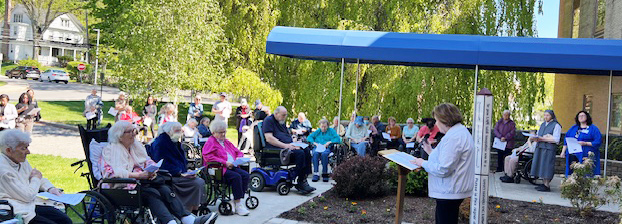 1 residents, staff and volunteers at St. Cabrini Nursing Home in Dobbs Ferry, NY gathered outside around our Peace Pole for a prayer service. With wars raging in various parts of the world and antisemitic and anti-Muslim rhetoric increasing in our country, and overseas, we wanted to gather to raise our voices in prayer for a more peaceful, just, respectful and nonviolent world.
Great Cause for Celebration!
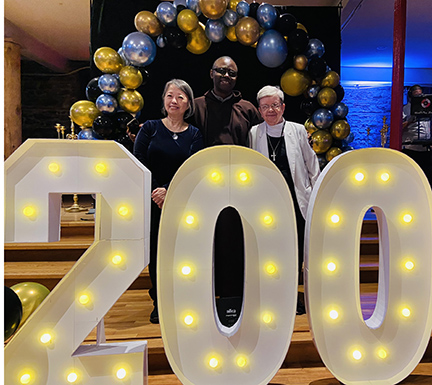 St. Mary’s Parish in Lower Manhattan is celebrating 200 years as a parish. The parish serves our sisters at the Sacred Heart Convent. The week of celebrations began on May 16th, with a beautiful gala. The chapel and the basement parish hall have just been newly renovated. Fr. Tom Mctamara, the paster gave a brief history of the church which was built on the highest hill in the area by Irish immigrants. The evening was filled with great food and a lot of dancing.
Cabrini HS Celebrates $17.7 Million in Scholarships and New Investment in Future Seniors
Cabrini High School is celebrating an extraordinary season of achievement and investment in its students’ futures.
The Class of 2026 has earned a record-breaking $17.7 million in college scholarships and grants, marking the highest scholarship total in school history. Scholarship-earning seniors averaged more than $361,000 in awards, among the highest scholarship average in the New Orleans area. Six graduates each earned more than $1 million in scholarships, while standout senior Marcia Quispe received an impressive $2.2 million in awards to attend Case Western Reserve University, where she plans to study Communication Science and Disorders. 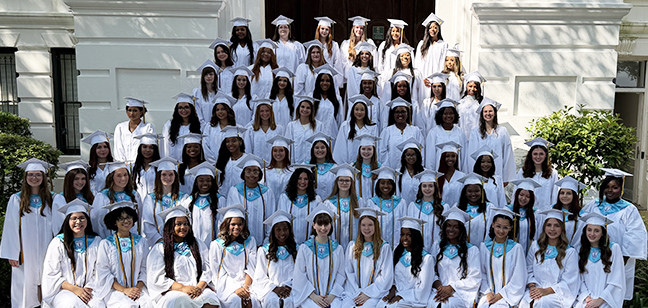
The milestone reflects Cabrini’s commitment to academic excellence, leadership development, and preparing young women for success in fields ranging from engineering and medicine to theater and business. Graduates will continue their studies at universities across the country, including Embry-Riddle Aeronautical University, Coastal Carolina University, the University of Kentucky, and Spelman College.
Cabrini High School STEP-UP DAY!
Adding to the excitement, Cabrini’s annual Step-Up Day celebration (a time-honored tradition when underclassmen “step up” to the next grade level) brought a surprise announcement for the rising senior Class of 2027. Highland Scholars Fund founder Matt Theriot revealed that every member of the upcoming senior class will receive a $2,000 scholarship to Cabrini High School.
The announcement represents a direct investment in students as they enter one of the most important and financially demanding years of their 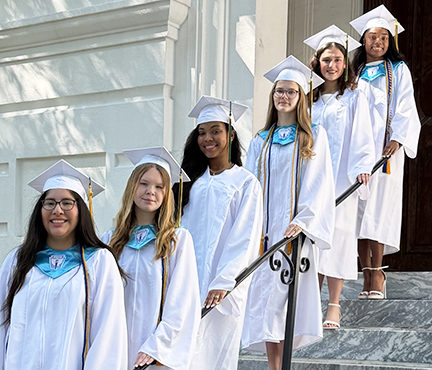 academic journey. The gift recognizes students’ hard work and growth while also helping families prepare for senior year and the transition to college and future careers. The Highland Scholars Fund, based in New Orleans, is dedicated to expanding educational opportunities through scholarships and mentorship programs that help students overcome financial barriers.
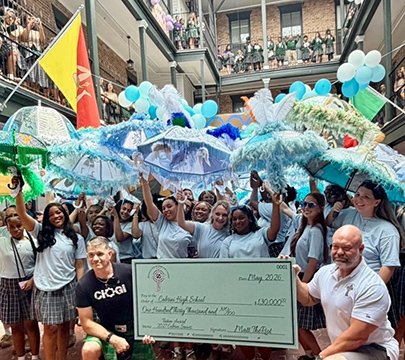 Together, these milestones highlight both the remarkable accomplishments of Cabrini students and the continued community support helping shape the next generation of leaders.
Pentecost Sunday
Pentecost Sunday
"The Holy Spirit is the soul of the Church. He gives her life,
he inspires her mission, and he guides her into all truth."
~ St. Augustine
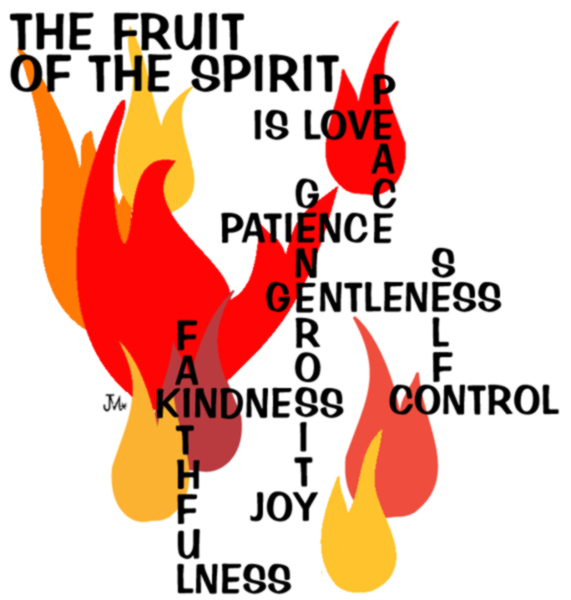 Celebrated fifty days after Easter, it commemorates the coming of the Holy Spirit upon the Apostles and the Blessed Virgin Mary, as described in the Acts of the Apostles. Catholics often refer to Pentecost as the “birthday of the Church” because the Apostles were strengthened by the Holy Spirit to go forth and preach the Gospel to all nations.
The symbols of Pentecost include wind, fire, and the dove, representing the power and presence of the Holy Spirit. The feast reminds Catholics that the Holy Spirit continues to guide, strengthen, and inspire the Church and all believers through the gifts of wisdom, understanding, courage, and love.
Pentecost marks the beginning of the "Age of the Spirit." Catholics believe that through Baptism and Confirmation, each believer receives the same Spirit that descended upon the Apostles. This indwelling provides the Seven Gifts of the Holy Spirit (Wisdom, Understanding, Counsel, Fortitude, Knowledge, Piety, and Fear of the Lord), which enable the faithful to live a life filled with special graces.
The fact that people from "every nation under heaven" heard the Apostles in their own language underscores the universal nature of the Church. The word "Catholic" means universal; Pentecost is the moment the Church’s mission officially expanded beyond the confines of Judea to the ends of the earth.
SHOWTIME!
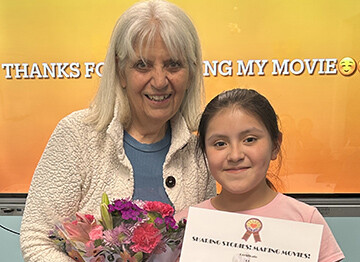
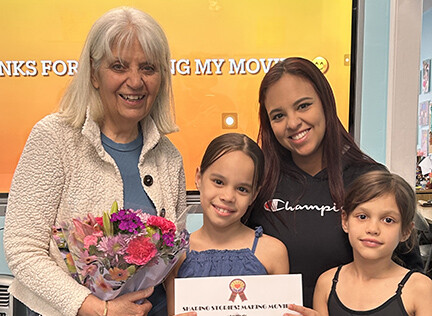
On May 13th, excitement filled the air at Cabrini Immigrant Services-Dobbs Ferry (CIS-DF) as students in the Making Movies! Sharing Stories! Program prepared for their much-anticipated “Movie Premiere.” Throughout the year, our young filmmakers wrote stories, illustrated them, and then filmed their movies. In addition to producing and editing the films, the students also added sound effects. This year, the students designed their own logo for their ‘movie production company.’
Under the guidance of their teacher, Anne Marie Santoro, the students proudly presented two of their movies to an audience of classmates, parents, grandparents and siblings. Before each movie, the students welcomed everyone, thanked them for attending the premiere and then introduced their film. Following the presentation, the students fielded questions from the audience. The parents and grandparents were beaming with pride.
At the conclusion of the program, Ms. Santoro presented each student with a certificate in recognition of their achievements. The students were eager to display their certificates at home. In gratitude for all that Ms. Santoro has done throughout the year, the students presented her with a beautiful bouquet of flowers along with heartfelt words of thanks for her dedication and encouragement throughout the year.
The students had a wonderful time enjoying some refreshments following their premiere. Although relieved that they had done a superb job, the excitement lingered. The students are already looking ahead to a special three-week summer program being held in July.
Neighbors Who Sing!
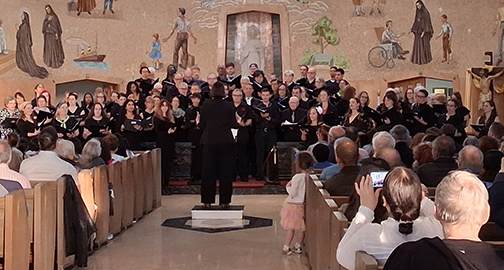 Last fall, the Washington Heights Community Choir began to rehearse at St. Frances Cabrini Shrine. This non-audition choir of 80 locals bri ngs joy, and a true neighborhood feel to the
chapel. As we've gotten to know them, we've discovered new areas of common interest and a new pool of volunteers.
The choir's repertoire ranges from sacred music to art songs to folksongs. They present four free concerts each year. Pictured here is their spring concert held on Tuesday, May 12.
First Concert of the Season on the Lawn
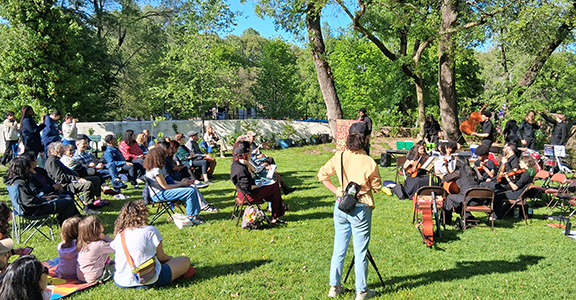
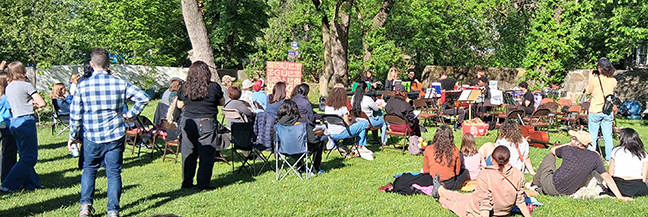 Sixth, seventh and eighth graders from a public school in Harlem provided. St. Frances Cabrini Shrine's first outdoor concert of 2026 on May 7.
The Mott Hall Symphonic Orchestra, composed of about 26 youth, played a mix of jazz, classical music, and adaptations of popular songs. The weather cooperated, and proud parents and curious
neighbors enjoyed an evening al fresco.
A Loud, Happy Celebration!
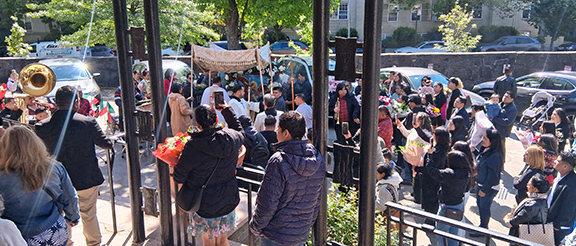
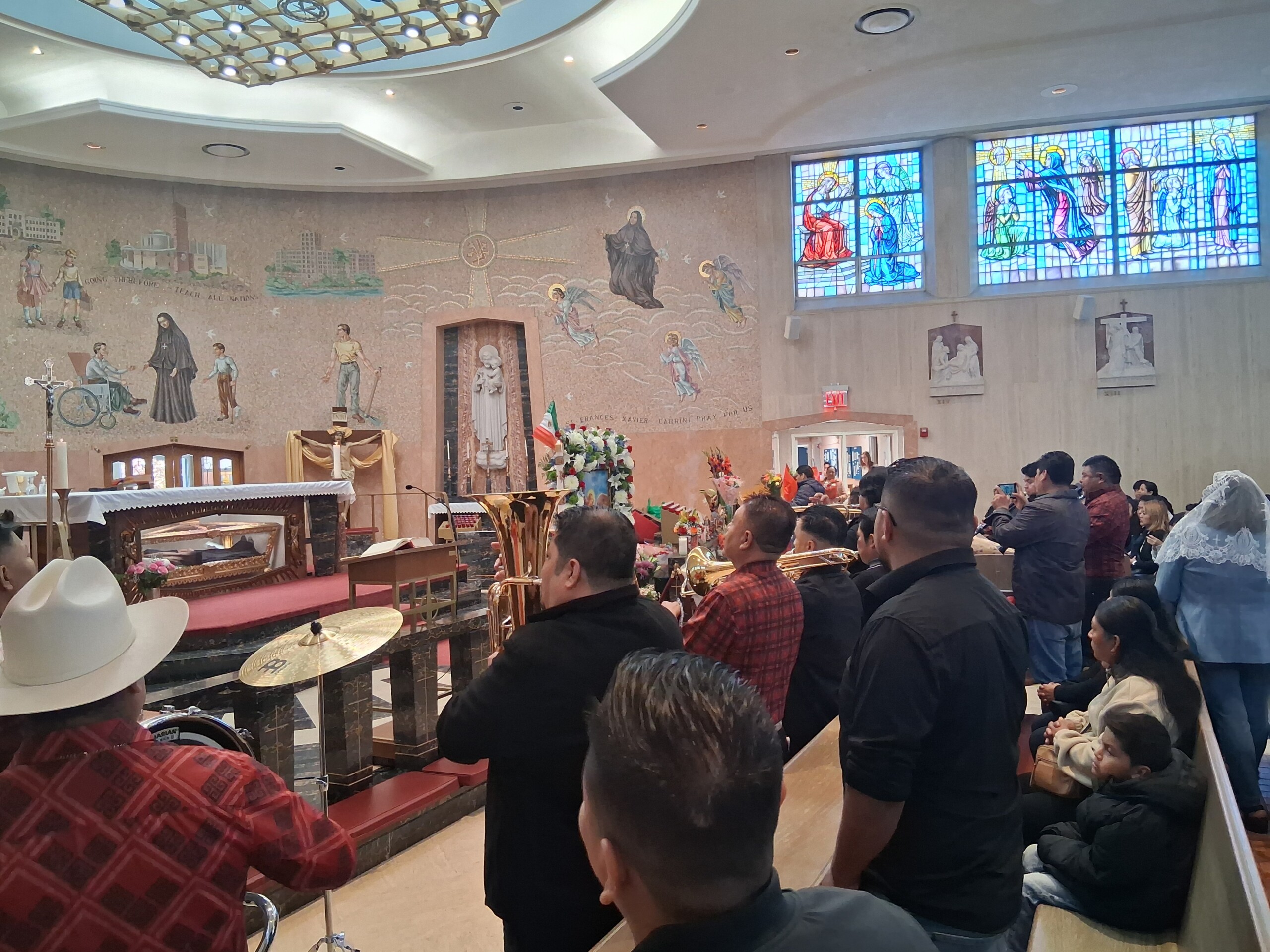 Tuba, trumpets, drums, clarinets, and mountains of flowers accompanied the faithful in a celebration in honor of St. Michael the Archangel at St. Frances Cabrini Shrine in New York on the morning of May 8. The procession and Mass were organized by a group of men who attend the Shrine's regular Spanish Mass.
The music began in the park down the street, prompting curious neighbors to emerge from their buildings, and children to race to the windows of the adjacent school.
The festive Mass was followed by a feast on the Shrine's lawn of homemade tamales, pozole, and other Mexican specialties.
Language, Leadership, and Cabrini High School’s Global Mission
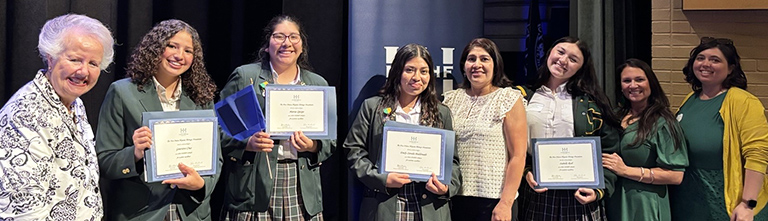 Cabrini High School continues to live out Mother Cabrini’s powerful words, “The world is too small for me. I want to bring the love of the Sacred Heart of Jesus to all people,” by forming students who can truly engage across cultures, and language is at the heart of that mission.
This year’s foreign language awards reflect not only academic excellence, but the development of real-world skills that allow students to communicate, connect, and lead in a global community. In one of the highest honors of Cabrini’s foreign language department, Junior Jordin McFarland earned first place in her French Oral Interview at the Southeastern Louisiana University Foreign Language Festival and received the prestigious Codofil Scholarship, a fully-funded opportunity to study in Brussels, Belgium this summer, and a true representation of the very spirit of Cabrini’s international mission in action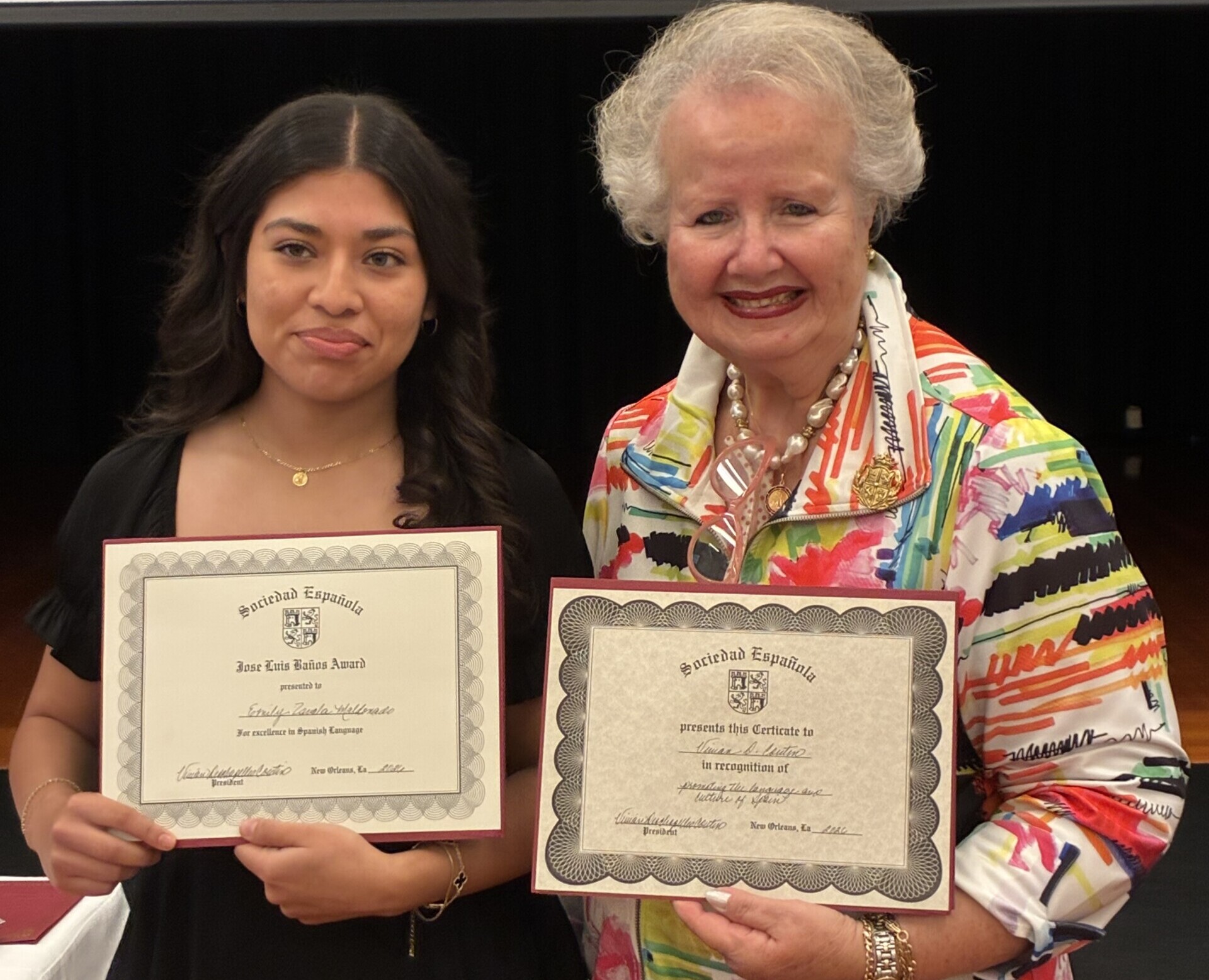
Cabrini students delivered an outstanding performance at the Southeastern Foreign Language Festival as a whole, dominating the competition and earning top placements across multiple categories in both French and Spanish. These accomplishments are more than awards; they represent students gaining the confidence and cultural fluency to engage meaningfully with the wider world.
Through language study, Cabrini students are not only excelling academically, they are continuing Mother Cabrini’s legacy, equipped to reach beyond borders with faith, compassion, and purpose.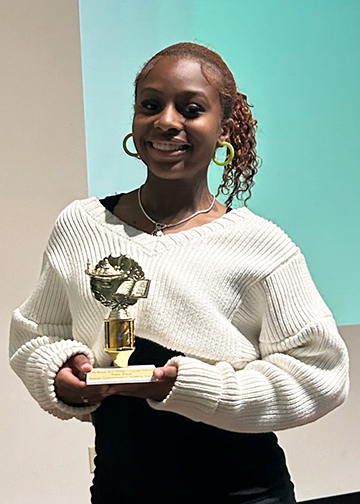
Patron Saints for World Youth Day Named
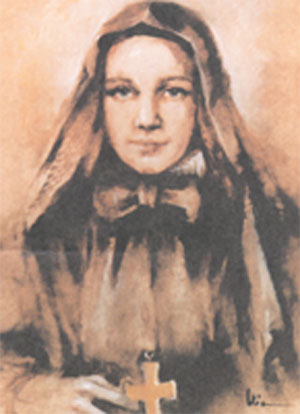
The five Patron Saints of WYD Seoul 2027 are:
- Saint John Paul II (1920–2005)— founder of World Youth Day, remembered for his emphasis on young people, the family and the dignity of human life
- Saint Andrew Kim Taegon (1821–1846) and companions — the first Korean Catholic priest, a symbol of faith and courage who was martyred at a young age
- Saint Frances Xavier Cabrini (1850–1917)— a missionary known for her care for migrants and the poor
- Saint Josephine Bakhita (1869–1947)— a former slave who became a religious sister and a witness to hope, freedom and faith transformed through suffering
- Saint Carlo Acutis (1991–2006)— a young saint of the digital age whose life remains a model of evangelization online.
- To learn more about WYD please click here
- « Previous Page
- 1
- 2
- 3
- 4
- 5
- 6
- …
- 22
- Next Page »