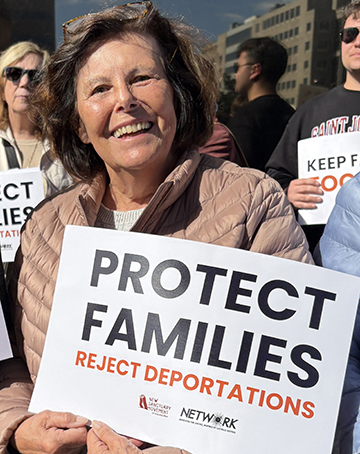
~ excerpts from an article by Ignatian Solidarity Network Staff
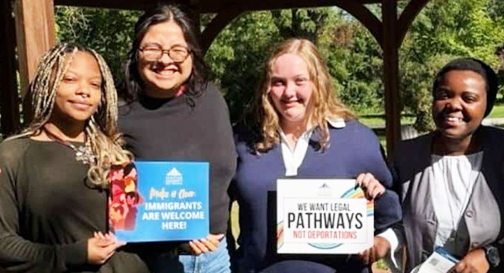
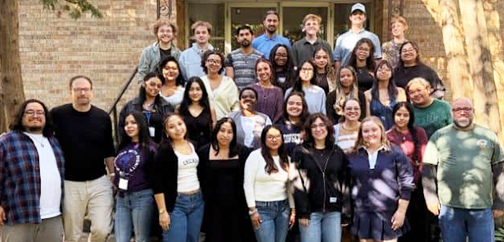
Students from Catholic campuses throughout the US gathered in Chicago from October 2 – 4th for the Cabrini Student Organizing Summit on Migration, a weekend hosted by the Ignatian Solidarity Network (IHN). The summit was named in honor of St. Frances Xavier Cabrini, and the objective of the summit was to equip students to organize for migration justice.
A framework of five stages guided each session: Encounter, Disruption, Reimagining, Prophetic Action and Reflection. Students were asked to name an issue they wanted to address on their campus and to identify which stage felt most clear and which was most challenging.
As representatives of their schools and communities, each participant brought differing reasons for their interest in migration justice.
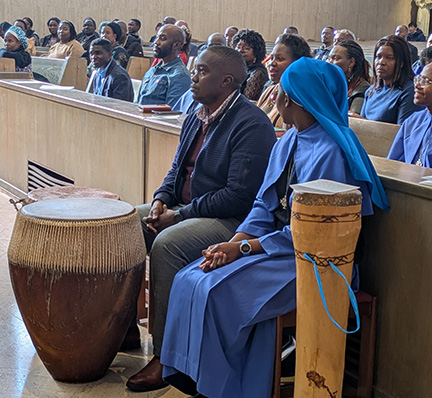
Sr. Evarlyne Ndeti, MSC, currently, a student at Loyola University in Chicago attended the conference. Loyola University Chicago has two efforts underway. One team will organize two students from each graduate school to identify needs in their communities, particularly among immigrant, international and multilingual students and will bring a collective proposal to graduate councils and university departments.
The next step comes soon. ISN’s Cabrini Week of Action for Migration Justice runs November 8-16, 2026, in celebration of St. Frances Cabrini’s feast day, inviting Catholic high schools and colleges to pray, learn, and act on behalf of immigrants and refugees. Suggested activities include vigils and Circles of Silence, educational events, postcard writing to elected officials, and resource drives for migrant-serving organizations. The week culminates on Monday, November 16, when students attending the Ignatian Family Teach-In for Justice in Washington, D.C., gather on Capitol Hill for Advocacy Day. ~ with thanks to Sr. Bernadette Anello, MSC for sharing this account.
 On Wednesday, September 30, a diverse group of over 50 people who work with immigrants at schools, hou
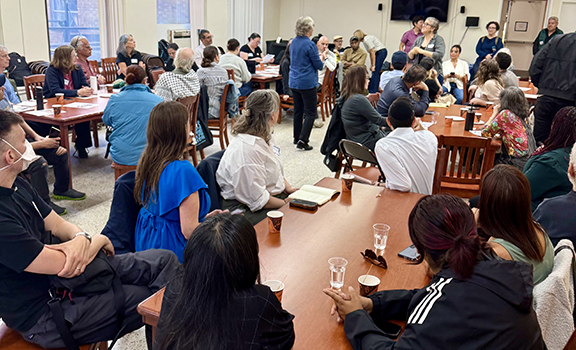 ses of worship, non-profits, small businesses, and the offices of elected officials gathered at St. Frances Cabrini Shrine for the launch of a new initiative called Uptown Open Arms. The event was coordinated by a team of local leaders, including the Shrine.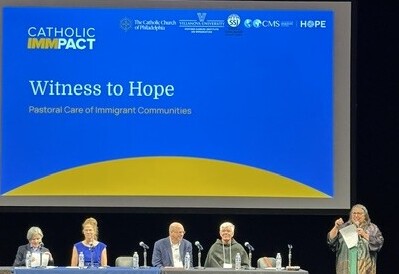
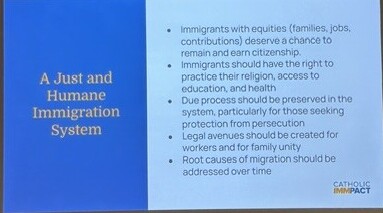
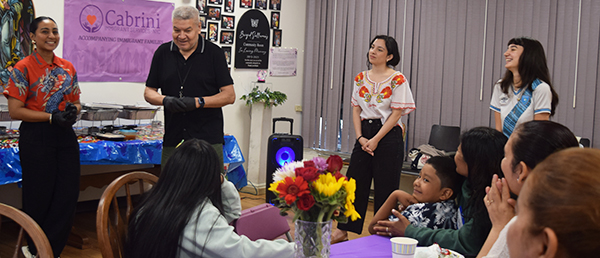
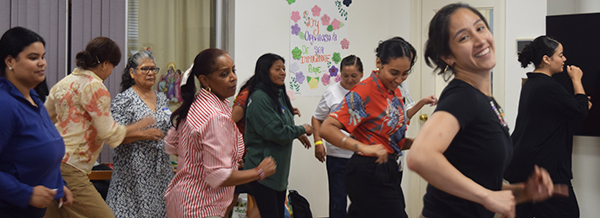
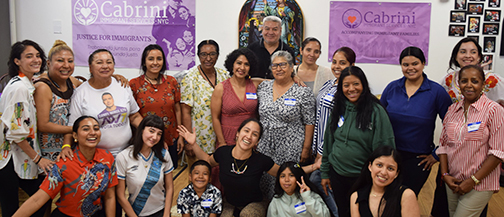 In celebration of Immigrant Heritage Month, Cabrini Immigrant Services of NYC (CIS-NYC) welcomed 20 participants for a wonderful community potluck. Clients brought traditional dishes from their home countries, giving everyone the opportunity to share and enjoy a variety of cultural foods.
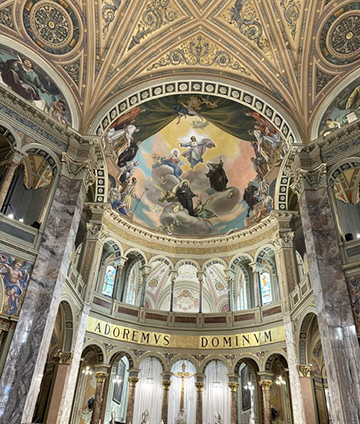 “I am here to pay homage to Mother Cabrini,” the Pope told all those gathered in the church for his visit. Pope Leo praised Mother Cabrini as a model for Christians today, especially for her compassion toward migrants and those on the margins of society. He encouraged young people to learn about her life and writings, highlighting her courage, trust in God, and dedication to serving those in need.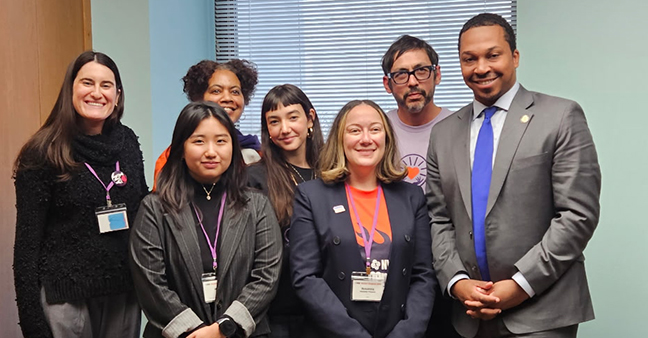
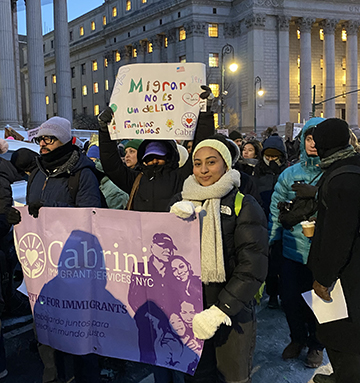
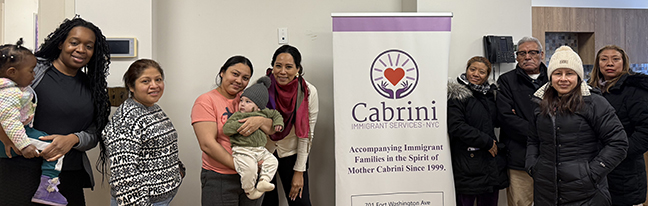 At Cabrini Immigrant Services of NYC, our staff, through the program Justice for Immigrants (JFI), has participated in a number of mobilizations in the city and in our state’s capital to show our support for protecting immigrant rights!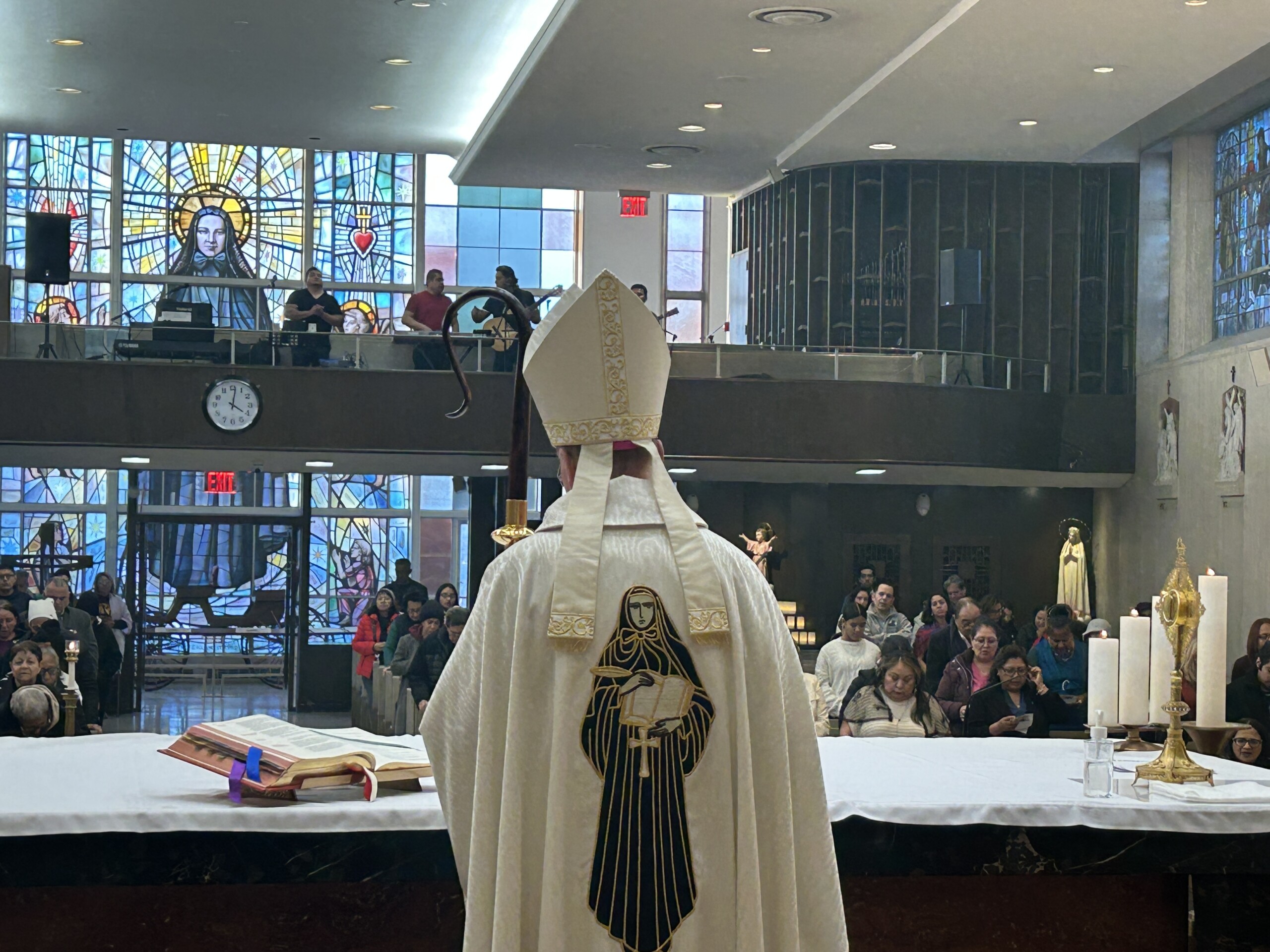
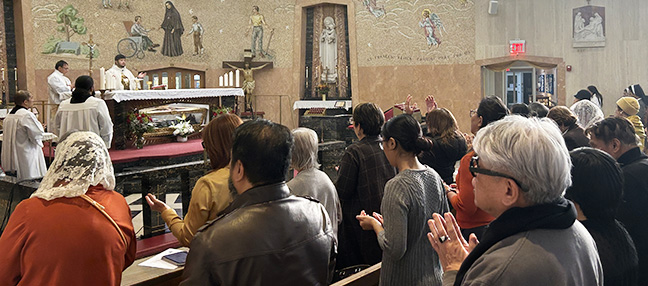
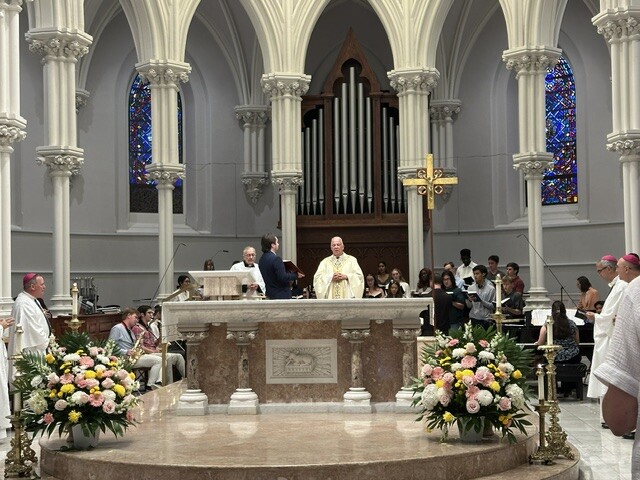
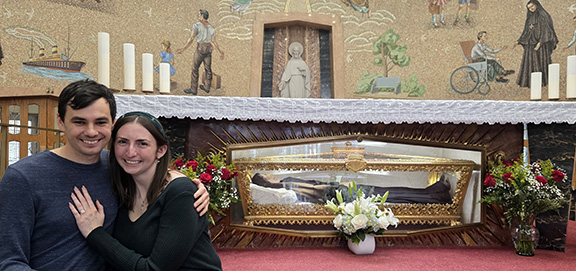 What a week! St. Frances Cabrini Shrine in New York hosted seven Feast celebrations over four days.
 recent days in the Chicago area, specifically, at the Broadview Processing Center, for the second time in three weeks, ICE agents barred a group of clergy, religious sisters, and lay people from entering the facility to offer Holy Communion to migrants being detained there.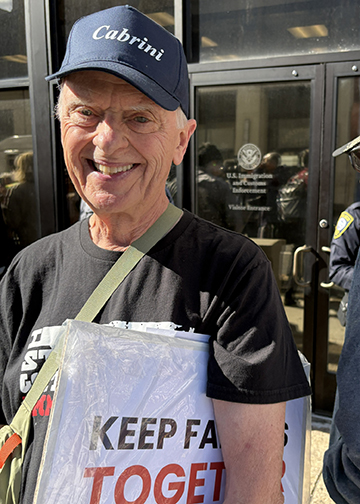
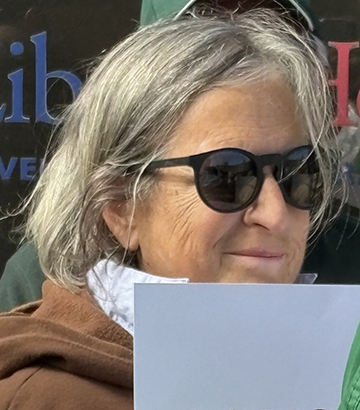
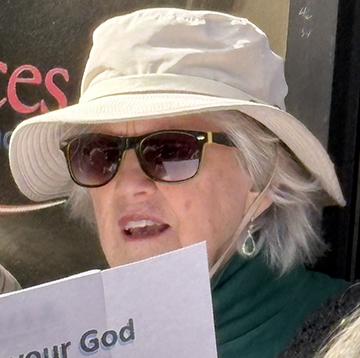 ~ a reflection by Jerry Zurek, PhD, former Chair, Communications Department, Cabrini University